Congratulations! You have started to chart your course in agbioscience!
Your recommended path has been developed by aligning your strengths and interests to skills needed in specific careers. These recommendations show where you may fit within the agbioscience sector. If the results do not directly align with the education path, continue to explore how the results could be incorporated in your career goals. You can take the quiz as many times you like to explore additional careers.
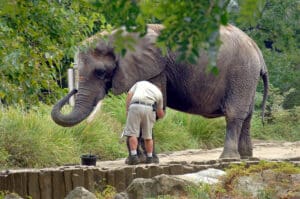
Zoologists and Wildlife Biologist
Study animals, their behavior and their relationship to their environments.
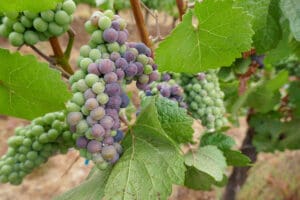
Viticulturist
Experts in the growing of grapes and apply their knowledge to produce the quantity and quality of grapes needed to make wine.
Veterinary Technician
Exercise a combination of attention to detail and empathy to provide the best care for animals in a variety of settings.
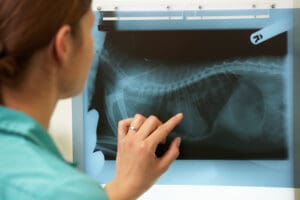
Veterinary Pathologist
Diagnose diseases by going straight to the source—they examine animal tissues and body fluids—to help sustain animal health.
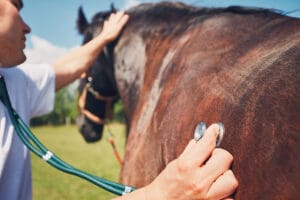
Veterinarian
Use their holistic knowledge to treat, protect and sustain animal life for years to come.
Training and Development Specialist
Train and coach others through work related development programs to improve individual skills or organizational performance.
Toxicologist
Investigate toxins, such as chemicals and radiation, and the adverse effects they can have on people and the environment.
Sustainability Specialist
Manage and promote sustainability initiatives at all levels of an organization.
Statistician
Use mathematics to analyze and interpret data in order to draw conclusions.
Solutions Architect
Design technical solutions that help organizations’ information and computer systems achieve their specific needs.
Soil Scientist
Explore and interpret soil characteristics to better understand earth’s land and water resources.
Software Quality Assurance Engineer and Tester
Perform testing throughout the development process to ensure that products meet design quality and are ready for end consumers.
Software Developer, Systems Software
Applying the principles of computer science and engineering to design and test operational back-end computer software systems.
Software Developer, Applications
Analyze the needs of businesses and consumers to design computer applications that will meet those needs.
Software Architect
Envision and design software applications — overseeing all development and ensuring technical standards are met.
Secondary Teacher
Teach agricultural, technical or engineering subjects to students at the high school level.
Scrum Master
Experts, coaches and facilitators for software development teams – ensuring all agreed upon practices and principles are followed.
Sales Representative
Sales professionals work directly with customers to identify their business needs and connect them to the products and services they represent.
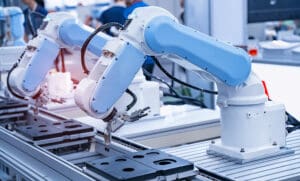
Robotics Technician
Use their hands-on expertise in robotic equipment to improve and transform their work—and our lives.
Research Scientist
Design, collect and analyze information from controlled lab-based experiments, investigations and trials.
Research Development Manager
Investigate and study trends and available data so that organizations can develop new projects, products and services.
Remote Sensing Technician
Use photographs to depict the Earth and help us understand how we can best utilize it.
Regulatory Affairs Manager
Regulatory affairs managers plan, direct and organize projects that require regulatory compliance and procedural oversight.
Quality Control Analyst
Test and ensure that raw materials, manufactured and agricultural goods meet established production standards.
Production Development Food Specialist
Manage the development of new food products, from concept through execution.
Process Engineer
Design, implement and refine industrial processes and equipment that turn raw materials into an end product.
Precision Agriculture Technician
Use the tech-savviness to create more and better food, for humans and our environment.
Plant Pathologist
Evaluate plant health by identifying possible disease, pest and nutritional damages.
Plant Geneticist
Research and study plants and crops in order to create new varieties and increase desirable traits.
Plant Biologist
Protect our agricultural food sources and create strategies to maximize yield, so that farmers and landowners can feed the world.
Nutritionist
Ensure that the food products consumed by people are safe and support healthy lifestyles.
Molecular and Cellular Biologist
Explore, examine and seek understanding of living things at their most basic level—to make new discoveries.
Microbiologist
Study tiny organisms to understand how they influence our entire world and leverage that information to make an impact.
Meteorologist
Use scientific principles to understand, observe and forecast atmospheric conditions.
Mechanical Engineering Technician
Make mechanical engineering systems efficient and safe for our world.
Mechanical Engineer
Combine their knowledge of engineering, physics and math to create functional and effective systems that keep our world running.
Market Research Analyst and Marketing Specialist
Conduct research and analyze consumer, industry and sales trends to create business and market strategies.
Marketing Manager
Create and lead the voice of a product or brand by identifying customers and developing marketing plans.
Manufacturing Engineer
Use their prowess for efficiency and procedures to create more efficient production processes or practices.
Logistics Manager
Manage and determine appropriate supply chain processes and analyze inventories.
Legal Counsel
Advise clients on legal transactions and represent them in legal proceedings.
Laboratory Technician
Working independently and assisting scientists by performing research, leading experiments and testing equipment maintenance.
Information Technology Web Designer
Combine creative layout and technical expertise to build and continuously improve websites.
Information Technology Specialist
Apply their expertise to implement, monitor and maintain information technology systems.
Information Technology Project Manager
Oversee the planning, execution and team management for technology projects.
Information Technology Configurator
Focused on software function, ensuring that programs are optimized to best fit an organization’s needs.
Information Technology Architect
Provide business solutions through the planning and design of customized information systems.
Information Security Analyst
Plan and carry out security measures that shield information and computer systems from cyber-attacks.
Hydrologist
Our go-to scientists and activists for protecting one of Earth’s most precious resources: water.
Human Resources Manager
With a constant pulse on organizational matters, human resource managers are the eyes, ears and voice for employees of all experience levels.
Horticulturist
Apply knowledge to maximize the growth and health of fruits, vegetables, flowers and other types of plants.
Graphic Designer
Graphic designers use a variety of mediums to design and create graphics that meet a brand’s specific needs such as logos, packaging, sales materials and displays.
Geospatial Analytics Scientist
Master map readers—they analyze and assess geographical information and data to improve software for precision agriculture.
Fungicide Chemist
Studies chemical compounds to create new or improved formulations that protect crops from fungi.
Full Stack Developer
Well-versed in both front end and back end development, typically working on both simultaneously.
Formulation Chemist
Design and develop new agbioscience products and innovate existing products based on needs of consumers and the industry.
Food Scientist and Technologist
The experts on what our food is made of, helping sustain our food supply in a way that makes it taste good, and good for you.
Food Science Technician
Provide laboratory and field support to food scientists in research, development and quality control.
Food Safety Specialist
Ensure that the food we eat is safe for consumption and meets all regulatory requirements.
Flavor Technologist
Combine science, chemistry and creativity to develop flavorings used in consumable products.
Fermentation Scientist
Relate the microscopic fermentation process to everyday food and medicine, advocating and progressing its use.
Environmental Scientist
Problem solvers and researchers—identifying and solving the environment’s most challenging and pressing issues.
Environmental Engineering Technician
Protect the environment and human health by implementing the plans of environmental engineers.
Environmental Engineer
Design systems to protect the environment and public health from waste and pollution.
Entomologist
Knowledge of insects, how they impact our world and how we impact theirs is crucial to our ecosystem.
Electronics Engineering Technician
Assist engineers in the design and development of computers and other electronic equipment.
Electronics Engineer, Except Computer
Design, build and test electronic equipment and systems to continue to advance technology.
Electrical Engineer
Design, develop, test and solve problems related to devices and systems that produce, or are powered by, electricity.
Economist
Predict solutions to problems by studying economics and statistical data, conducting market research, preparing reports and formulating plans.
DevOps Engineer
Manages operational tasks associated with programs and development.
Design Engineer
Innovators and creative problem solvers who transform ideas into real world products.
Data Scientist
Responsible for mining large amounts of unstructured data to extract useful information.
Data Processor
Source, verify and formulate new information for organization databases.
Data Curator
Organize massive amounts of data to streamline the analytics process within all IT, science and business fields.
Database Architect
Investigators and problem solvers – creating and managing large, unique electronic databases to meet business needs.
Cybersecurity Engineer
Protect internet users from malicious cyber-attacks, hacking attempts and information breaches.
Conservation Scientist
Nature’s champion—overseeing, improving and protecting the quality of our natural resources.
Computer Systems Analyst
Unite organizations with advanced computing—applying customized solutions to improve operational output.
Computer Programmer
Write, test and fix the code that allows computers and software to function.
Computer Network Support Specialist
Monitor, evaluate and troubleshoot all computing issues for individual users and at an organizational level.
Computer Network Architect
Plan and design data and communication networks so devices can send and receive information.
Computer Hardware Engineer
Research, design, develop and test computer systems and related products.
Computer and Information Research Scientist
Problem solvers and innovators–developing new systems while also discovering modern ways to use existing technology.
Computational Chemist
Use chemical science and computer programming to simulate and solve real-world chemical problems.
Computational Biologist
Develop models to better understand biological systems and relationships.
Communications Manager
Plan, direct, or coordinate activities designed to create and maintain your brand’s public image or raise issue awareness for their organization or client.
Cloud Engineer
IT professionals who understand, consult and handle the technical workload relating to cloud computing.
Climate Change Analyst
Study weather patterns to predict climate change, evaluate its potential impact and work to improve environmental practices.
Chemist
Leaders in the lab; they help us understand the depths of the world we live in so we can make better decisions on how we use it.
Chemical Technician
Support chemists in the lab, getting hands-on to create processes and perform experiments.
Chemical Engineer
Apply the principles of chemistry, physics and engineering to design equipment and create processes that are more safe and efficient.
Biostatistician
Analyze data on living things to make predictions and draw conclusions.
Biologist
Studies life in all its forms, functions and its relationships to the environment.
Biological Technician
Help conduct scientific research by providing laboratory support to scientists and engineers.
Bioinformatics Scientist
Develop and use computer technology to manage, analyze and store large sets of biological data.
Bioengineer
Work on the cutting edge of technology and medicine, developing solutions to improve the quality of life.
Biochemist and Biophysicist
Study and conduct research on the chemical and physical properties of living things.
Aquatic Scientist
Study aquatic plant and animal life in the field or laboratory.
Animal Scientist
Animal scientists conduct research focused on the genetics, nutrition, growth, development and reproduction of domestic livestock and companion animals.
This site includes information from O*NET OnLine by the U.S. Department of Labor, Employment and Training Administration (USDOL/ETA). Used under the CC BY 4.0 license. AgriNovus Indiana has modified all or some of this information. USDOL/ETA has not approved, endorsed, or tested these modifications.
In addition to O’Net, AgriNovus Indiana gathered information from several resources. If you would like more information about the data on this site, please contact us at fieldatlas@agrinovusindiana.com.